The issuance of one-cent coins in 1995 occurred within the standard production program of the United States Mint.
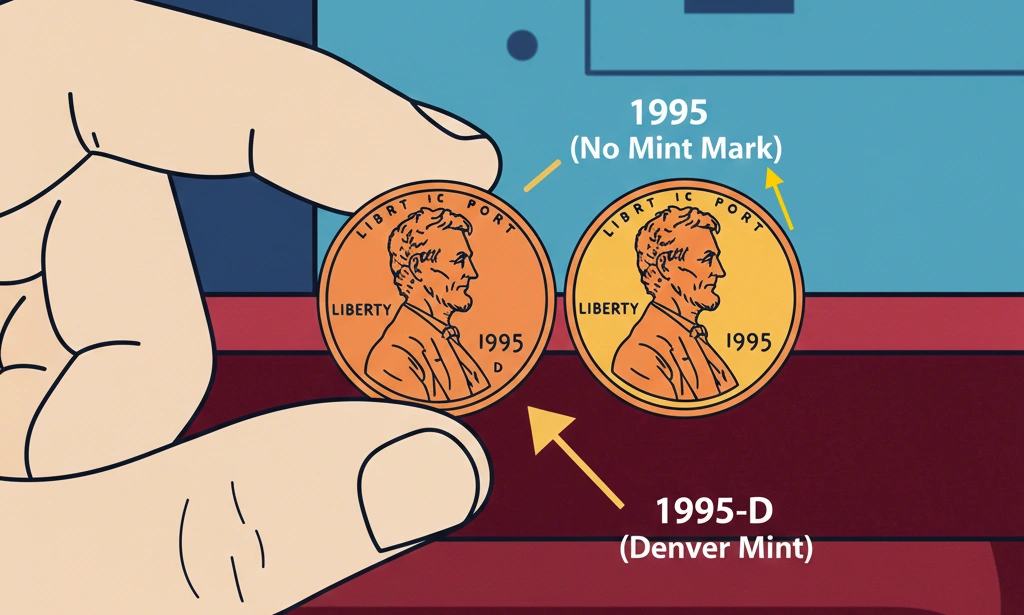
The primary share of the mintage originated at the Denver facility, denoted by the small letter "D" below the date of issue.
The total volume of mintage in Denver reached 7,128,560,000 specimens.
This figure exceeds the production volume of the Philadelphia Mint, having released 6,411,440,000 units.
The 1995-D coins were intended to provide for the needs of cash circulation.
The high mintage ensures the availability of most specimens at face 1995 D penny value given the presence of wear signs.
Parameter | Value |
Core Composition | Zinc (99.2%) |
Outer Coating | Copper (0.8% of total volume) |
Mass | 2.50 grams |
Diameter | 19.05 millimeters |
Thickness | 1.52 millimeters |
Edge Type | Plain |
The value of the 1995-D penny varies depending on the physical condition assessed by professional grading services (PCGS, NGC).
For modern coins worth money, the key criterion remains the absence of damages sustained during the circulation process.
The Sheldon scale, including a range from 1 to 70 points, serves as the basis for market pricing.
Specimens scoring fewer than 60 points do not possess collector value beyond the face value.
For 1995 copper coins, the preservation of the original color holds critical significance.
Red (RD): Coins having retained at least 95% of the original red luster.
Red-Brown (RB): Specimens with an original color content ranging from 5% to 95%.
Brown (BN): Coins having lost their luster completely and become brown due to oxidation.
Financial value concentrates in the RD category, representing the greatest interest at high grades.
Market prices for the 1995-D demonstrate exponential growth when moving from grade MS67 to MS69.
The value of coins in MS63-MS65 condition remains minimal due to excess supply.
Grade (MS) | Estimated Price ($) | Market Status |
MS63 | 0.10 – 0.50 | Common condition |
MS65 | 1.00 – 3.00 | Entry-level collector grade |
MS66 | 5.00 – 12.00 | Good preservation |
MS67 | 20.00 – 45.00 | High preservation |
MS68 | 150.00 – 300.00 | Rare degree of preservation |
MS69 | 650.00 – 900.00 | Investment level |
Sales at public auctions record peak value points for the 1995-D.
The record price for a 1995-D coin in PCGS MS69 RD grade totaled 805 US dollars.
This transaction was recorded at a Heritage Auctions event in 2018.
In 2021, a similar specimen sold for 720 dollars, indicating a local price correction.
The average price range for the MS68 RD grade over the last 5 years demonstrates stability with a deviation not exceeding 5% in either direction.
Year | Average MS68 RD Price ($) | Percentage Change |
2020 | 210 | — |
2021 | 225 | +7.1% |
2022 | 220 | -2.2% |
2023 | 235 | +6.8% |
2024 (Forecast) | 240 | +2.1% |
Despite a similar appearance, the market behavior of coins from Philadelphia and Denver differs.
The main difference lies in the presence of the Doubled Die Obverse (DDO) variety among coins without a mint mark.
The 1995-D penny has no confirmed significant doubled die varieties comparable in rarity to the Philadelphia DDO.
The absence of such errors limits the price growth of the 1995-D only to preservation parameters.
An investor purchasing a 1995-D focuses exclusively on the strike quality and the absence of contact marks on the coin field.
Minor production defects are sometimes found on Denver coins from 1995.
These include signs of die destruction (Die Chips) and small cracks (Die Cracks).
Such deviations, not being cataloged varieties, add from 5 to 20 dollars to the price.
Off-center strike errors occur extremely rarely.
A 10-15% displacement on a 1995-D coin can be valued at 30-50 dollars provided the date and mint mark remain.
Die Cracks: Raised metal lines arising from cracks in the die.
Clipped Planchet: Coins struck on planchets with a missing segment.
Repunched Mint Mark (RPM): A re-struck "D" letter occurring in the early stages of production (rare for the 1995 issue).
Determining high value is impossible without the involvement of independent experts.
A coin placed in a plastic slab receives legal protection of its authenticity and condition.
The cost of grading services (ranging from 25 to 50 dollars per coin) makes sending only ideal specimens practical.
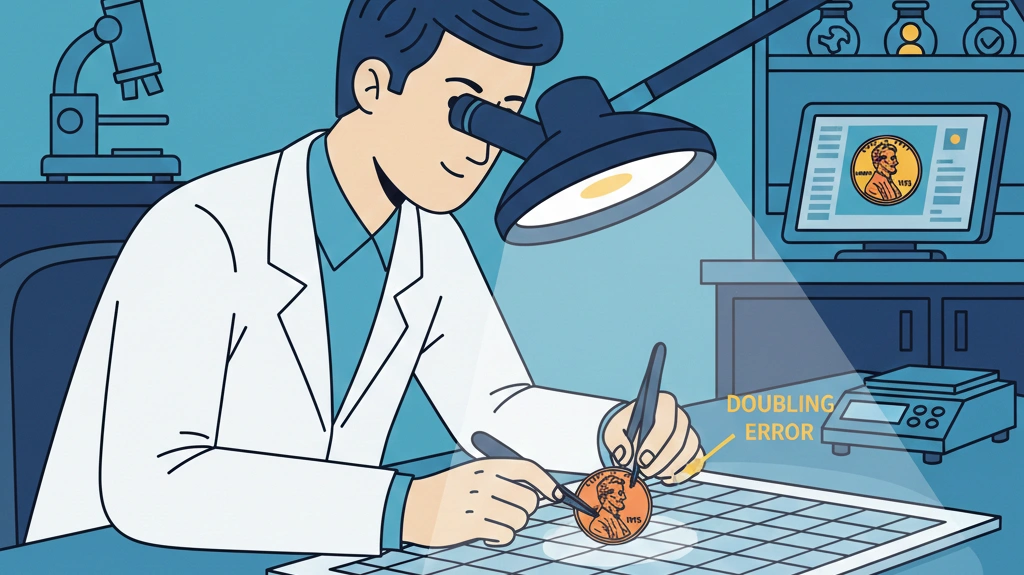
Experts analyze the surface under a microscope, identifying microscopic scratches invisible to the naked eye.
The discovery of even one deep scratch on Lincoln’s cheek reduces the grade from MS68 to MS66, devaluing the asset by 90%.
Zinc pennies from 1995 are subject to "zinc rot"—corrosion occurring upon damage to the copper layer.
Moisture entering the coin causes coating bubbles and structural destruction.
Specimens with signs of corrosion lose numismatic value regardless of rarity.
Using PVC-free albums and storing in a dry room with controlled temperature is recommended.
The use of silica gel allows for reducing the risk of copper layer oxidation.
The small letter "D" serves as an indicator of a specific production cycle.
For the 1995 issue, the mint mark confirms the origin from Denver, having its own quality control features.
Historically, the Denver Mint produced coins with sharper detailing than Philadelphia.
Finding a 1995-D with ideal striking of all Lincoln Memorial details on the reverse is an advantage.
The clarity of the Memorial steps and columns directly influences the attainment of an MS68 or MS69 grade.
The sale of top-quality coins is conducted through specialized auctions or dealer networks.
The liquidity of the 1995-D in MS67-MS68 condition is assessed as high.
Coins in MS69 condition belong to the low-liquidity category due to the high price, requiring time to find a buyer.
The percentage ratio of 1995-D coins in MS69 grade to the total mintage is less than 0.00001%.
This rarity guarantees capital preservation in the long term in the absence of a mass release of new finds to the market.
Primary inspection of 1995-D coins requires the use of the best coin value app.
It is necessary to check the following areas:
The coin fields around the portrait for the presence of small bag marks.
The contours of the letter "D" for clarity and the absence of blurriness.
The tops of the letters in the word "LIBERTY".
The preservation of the mint luster, having a radial character.
The absence of luster on the tip of Lincoln’s nose or hair indicates the coin's stay in circulation.
The 1995-D penny remains an example of a coin whose value is determined exclusively by physical perfection.
The absence of copper DDO varieties shifts the collecting focus to the search for flawless surfaces.
The small letter "D" distinguishes this mintage into a separate market segment with its own records and dynamics.
Investing in the 1995-D is justified only when purchasing certified specimens in a grade not lower than MS68 RD.
Careful selection of coins from bank rolls (bank packaging) maintains the probability of discovering a valuable specimen without capital investment.